
Coumarin
Odor profile, perception thresholds and chromatographic analysis
Coumarin is an aromatic lactone associated with hay, tonka, vanilla, almond-like and balsamic notes. Its soft, warm, powdery and slightly bitter profile makes it an important molecule in fougère, oriental, amber, tobacco and vanilla accords.
Naturally present in some raw materials and frequently found in fragrance compositions, coumarin is one of the fragrance allergens that must be monitored in cosmetic products subject to labeling requirements.
Molecular identity
Odor profile of coumarin
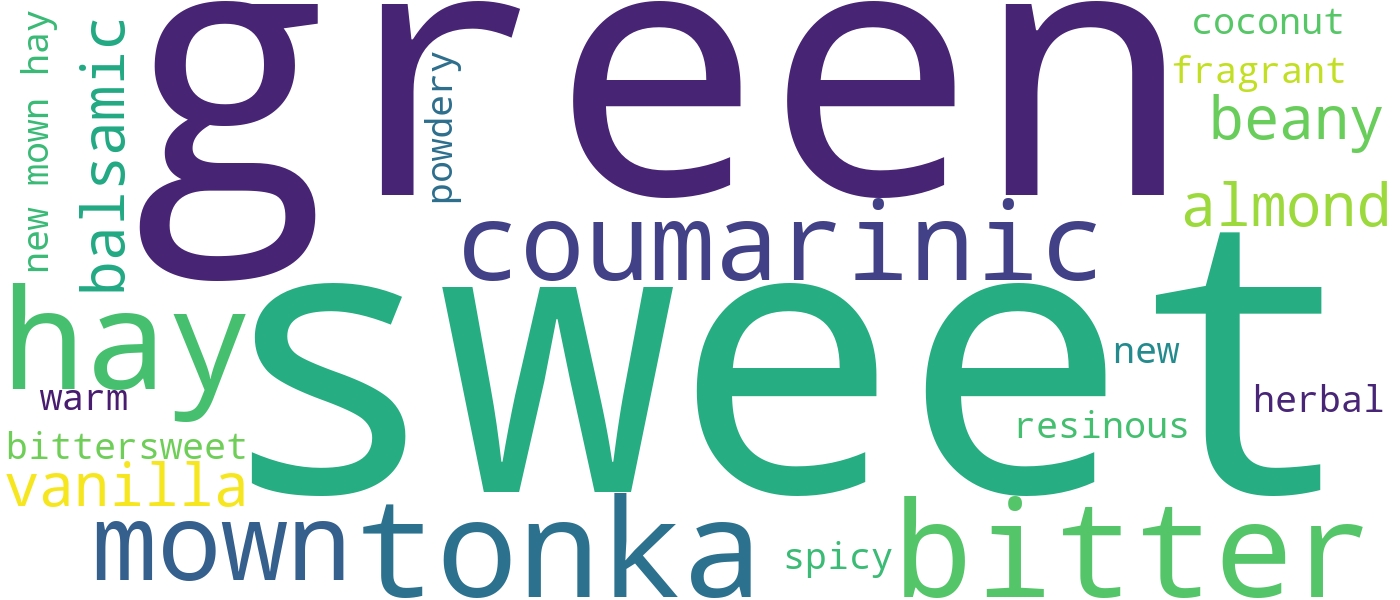
Coumarin is characterized by sweet, green, hay, tonka, vanilla, balsamic and slightly bitter notes. Depending on the matrix, it may also display powdery, almond-like, herbal or resinous nuances.
In fragrance compositions, coumarin brings roundness, a hay-like or tonka facet, a soft vanilla impression and contributes to the persistence of certain accords.
Odor descriptor word cloud
The dominant descriptors highlight a profile described as sweet, green, hay, tonka, coumarinic, bitter, vanilla and balsamic.
Occurrence in fragrance matrices
Coumarin can be found in natural raw materials, fragrance concentrates, flavor bases and perfumed cosmetic products. Its interpretation depends on the origin of the raw materials, the formulation and the complexity of the matrix.
Natural raw materials
Hay, tonka, balsamic, vanilla-like or powdery facets.
Fragrance concentrates
Fougère, oriental, tobacco, amber, vanilla or powdery accords.
Cosmetic products
Perfumes, eaux de parfum, scented skincare, shower gels, shampoos and rinse-off products.
Flavor bases
Vanilla, almond-like, tonka, hay, balsamic or slightly spicy profiles.
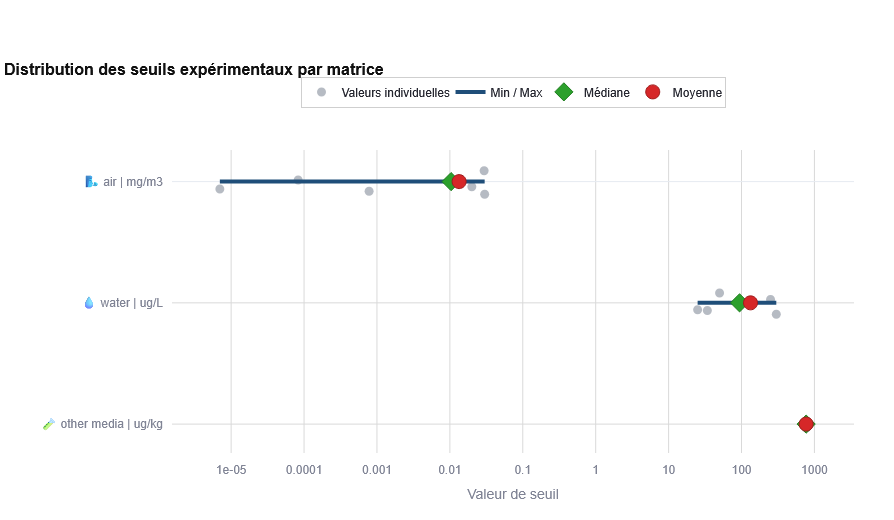
Perception thresholds of coumarin
Coumarin perception thresholds vary depending on the matrix. Threshold values must be interpreted as contextual data, influenced by the medium, the experimental method and interactions with other volatile compounds.
Regulatory status of coumarin
Coumarin is one of the fragrance allergens subject to labeling requirements in cosmetic products. Its presence must be assessed in the finished product according to the applicable regulatory thresholds.
Leave-on products
Perfumes, eaux de parfum, creams, lotions and products applied without rinsing.
Rinse-off products
Shower gels, shampoos, liquid soaps and products intended to be rinsed off.
Coumarin analysis by GC-MS and GC×GC-ToFMS
In the Twistaroma database, coumarin is observed at RI 1441 on DB-5 and RI 2454 on DB-Wax. These two values make it possible to compare its behavior on a non-polar and a polar stationary phase.
Within a ±10 RI window around coumarin, the DB-5 region contains 166 entries, including coumarin. The DB-Wax region contains 36 entries, including coumarin. This difference highlights the importance of comparing two column polarities when interpreting complex fragrance matrices.
In GC-MS, mass spectra can distinguish many compounds that are close in retention. However, when several molecules share characteristic ions or when the matrix is highly loaded, the risk of incorrect attribution increases.
GC×GC-ToFMS provides an additional separation dimension and full spectral information. It strengthens the identification of coumarin in fragrance concentrates, essential oils, flavor bases and complex ready-to-inject matrices.
RI DB-5
Coumarin: RI 1441. ±10 RI window: 166 entries in the Twistaroma database.
RI DB-Wax
Coumarin: RI 2454. ±10 RI window: 36 entries in the Twistaroma database.
GC-MS risk
Coelutions become critical when neighboring compounds share ions or overlap at high intensity.
GC×GC value
Two-dimensional separation reduces ambiguity and improves the reliability of fragrance allergen screening.
Mapping compounds close to coumarin
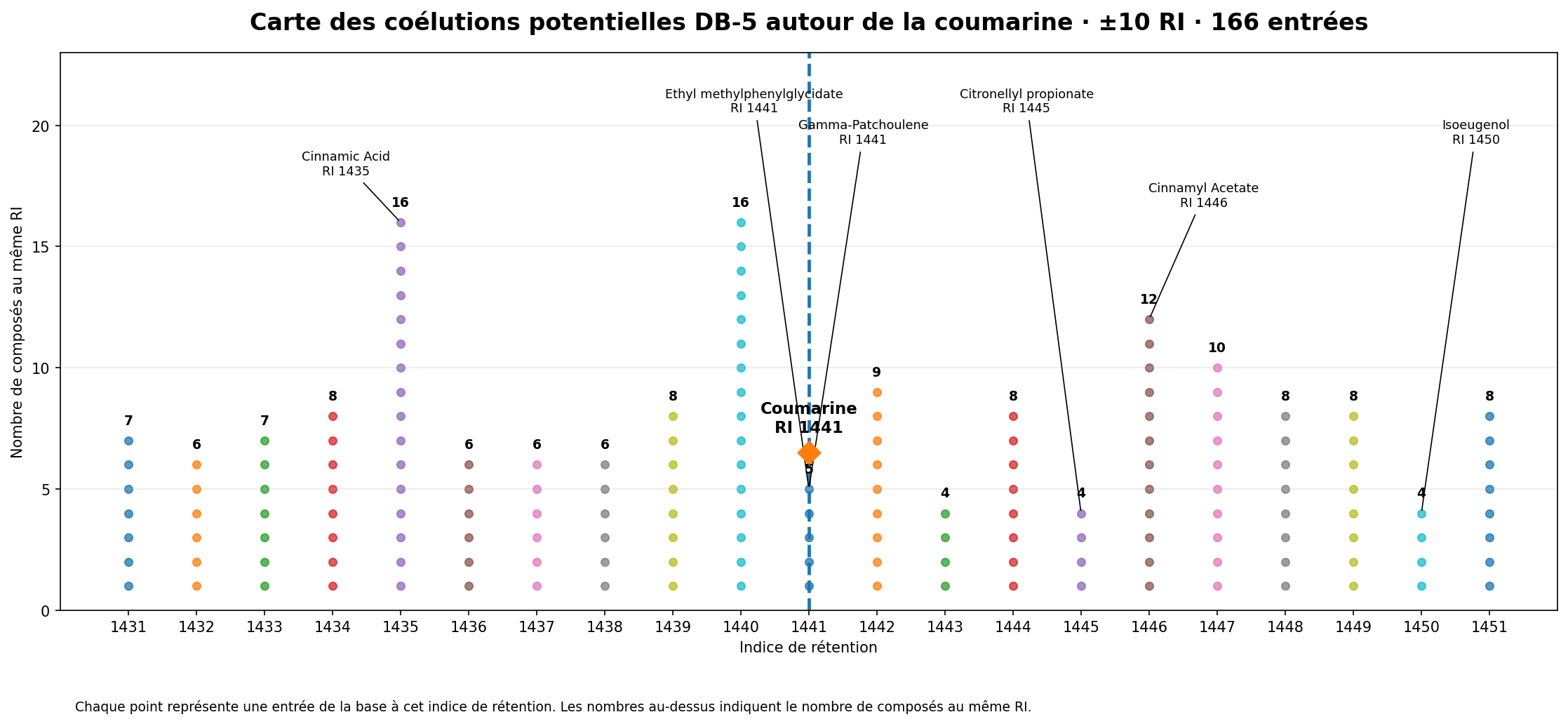
The maps below visualize the density of compounds found within a ±10 RI window around coumarin. Each point represents one database entry at the corresponding retention index. The numbers indicate how many compounds are observed at the same RI.
These visualizations are not experimental chromatograms. They show chromatographic proximity and explain why coumarin identification in complex fragrance matrices must combine RI, mass spectrometry, DB-5 / DB-Wax comparison and GC×GC-ToFMS.
DB-5 window around coumarin
On DB-5, coumarin is observed at RI 1441. The ±10 RI window contains 166 entries, indicating a highly crowded chromatographic region.
DB-Wax window around coumarin
On DB-Wax, coumarin is observed at RI 2454. The ±10 RI window contains 36 entries. The region remains analytically relevant, although it is less crowded than on DB-5.
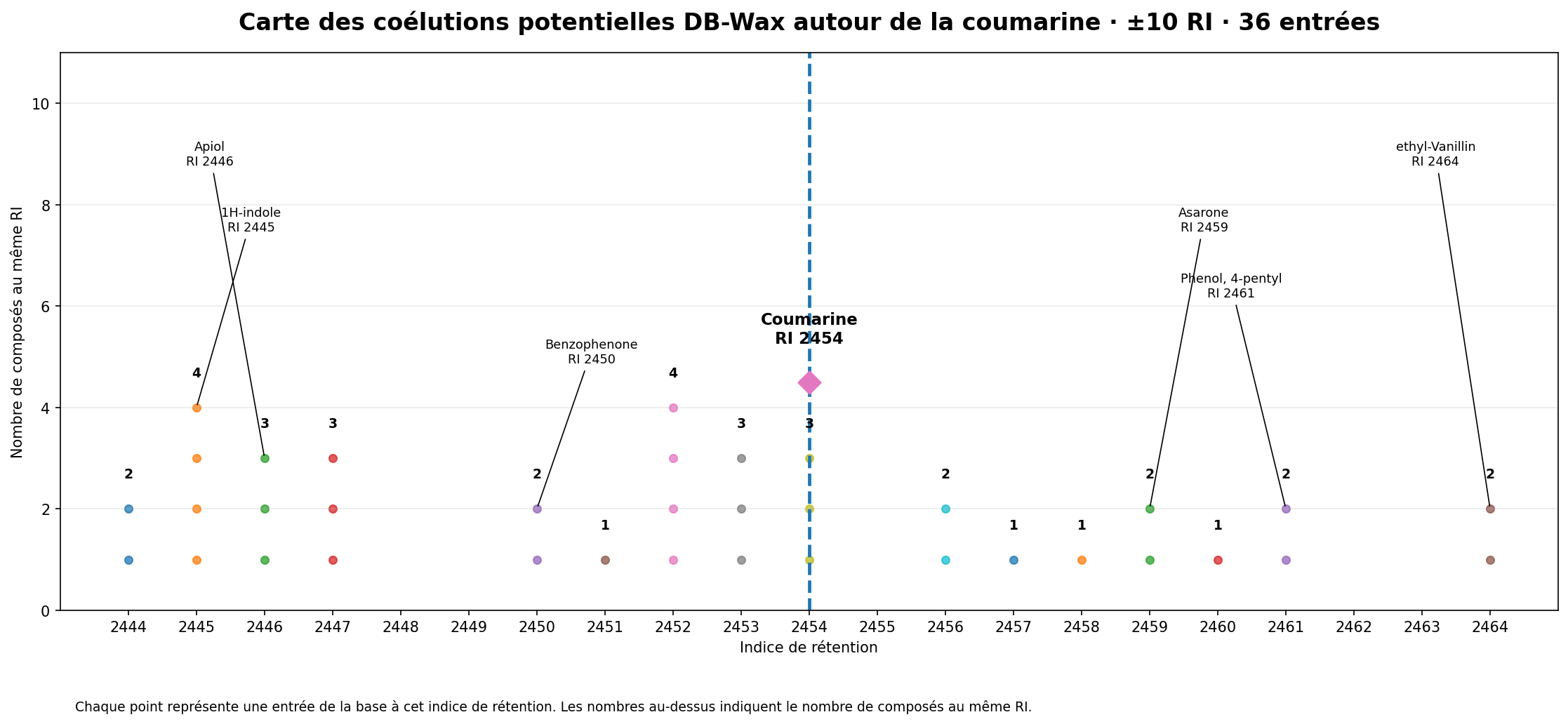
These maps are based on Twistaroma retention index data. They illustrate potential chromatographic proximity, not systematic interference. In complex matrices, confirmation relies on the combination of DB-5 RI, DB-Wax RI, mass spectra and GC×GC-ToFMS separation.
Interpreting coumarin in complex matrices
The retention regions around coumarin may contain aromatic compounds, phenolic compounds, indoles, esters, acids, sesquiterpenes or natural matrix constituents. They are not systematic interferents, but their RI proximity may complicate identification in loaded matrices.
Twistaroma combines DB-5 and DB-Wax retention indices, mass spectrometry and GC×GC-ToFMS to strengthen the reliability of regulated fragrance allergen screening.
Examples close on DB-5
Around RI 1441 on DB-5: ethyl methylphenylglycidate, octyl isovalerate, gamma-patchoulene, cinnamyl acetate, citronellyl propionate, phenethyl butyrate, tyrosol, cinnamic acid and isoeugenol.
Examples close on DB-Wax
Around RI 2454 on DB-Wax: ethyl vanillin, asarone, phenol, 4-pentyl-, benzophenone, ethyl octadecanoate, heptadecyl acetate, apiol, indole, 2-methylindole and dodecanoic acid.
Other examples of allergens in fragrance matrices
These profiles illustrate the diversity of chemical families encountered in fragrance matrices: terpenes, aldehydes, phenolic compounds and aromatic lactones.
Need to analyze coumarin in a fragrance matrix?
Twistaroma performs fragrance allergen screening and analysis by GC-MS and GC×GC-ToFMS on perfumes, eaux de parfum, essential oils, concentrates, fragrance bases and ready-to-inject matrices.
- Ready-to-inject and complex matrices
- Screening of regulated fragrance allergens
- 10 ppm / 100 ppm threshold interpretation
- GC-MS and GC×GC-ToFMS analysis
- Documented PDF report